Installing vinyl siding but getting stuck on the trim? Those rough, unfinished edges look terrible. I know you want a clean, professional finish for your home’s exterior.
J-channel is a J-shaped piece of vinyl or metal trim used in siding installation. Its main job is to hide the cut ends of siding panels around windows, doors, and along the roofline. It creates a clean, finished edge and helps channel water away.
When I first started installing siding, I thought J-channel was just for looks. I quickly learned it’s one of the most important pieces of the whole system. Without it, your siding job can look messy and be vulnerable to water damage. It’s the secret to making everything look sharp and last a long time. It guides you through the whole project, creating clean lines wherever a siding panel ends. Stick around, and I’ll break down everything you need to know about this essential siding component.
What is The Purpose of The J Channel?
Are your siding projects looking unfinished? Exposed cuts can cheapen the look and let water in. You need a simple way to seal edges for a professional job.
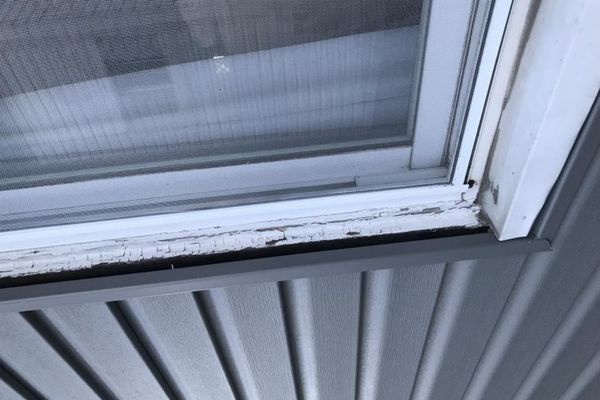
The main purpose of a J-channel is to provide a finished edge where siding meets a wall, roof, window, or door. It covers the cut ends of the siding panels for a clean look and helps direct rainwater away from the wall sheathing underneath.
J-channel is a true multi-tasker on any siding job. I think of it as the framework that defines the whole project. Its roles are more than just cosmetic. Let’s look at its key functions.
Hiding Imperfections
The most obvious job of the J-channel is to hide the cut ends of your siding panels. It’s almost impossible to get a perfectly straight, factory-smooth cut on every single piece of siding. The J-channel’s pocket neatly conceals these cuts. I remember a job where the miter saw blade was getting dull. The cuts were a little jagged. The J-channel covered them perfectly, saving me a ton of time and frustration. It gives you a clean, straight line to look at, which makes the whole installation look professional and tidy.
Water Management
This is a critical function. The channel is designed to catch rainwater that runs down the side of your house and direct it downwards, away from vulnerable areas like window frames and door jambs. Without it, water could get behind your siding. This could lead to rot, mold, and serious structural damage over time. It acts as a mini gutter system right where you need it most, protecting the bones of your house.
Providing a Secure Fit
The J-channel also provides a receiving channel for the siding panels to slide into. This helps hold them securely in place. It allows the panels to expand and contract with temperature changes without buckling or warping. This movement is really important for the longevity of vinyl siding.
What Does a J Channel Look Like?
Confused by all the different trim pieces? It’s hard to pick the right part when they all look similar. You just want to know what to look for.
A J-channel looks exactly like its name suggests: a long, thin piece of trim with a cross-section shaped like the letter “J”. It has a flat nailing flange on one side and a curved channel or pocket on the other side to receive the siding.
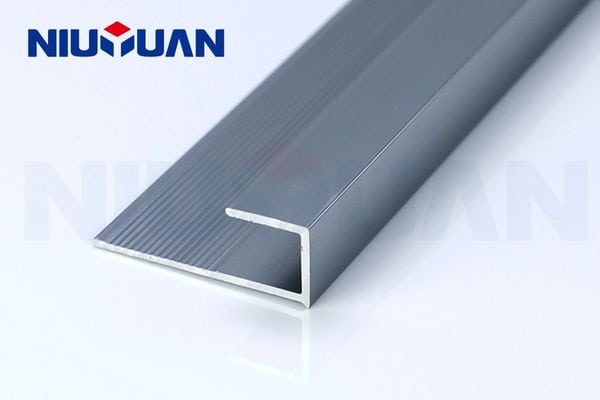
When you see a piece of J-channel up close, its simple design makes a lot of sense. I’ve handled thousands of feet of this stuff, and its form is perfectly suited for its function. The shape is consistent, but there are some variations in size and material you should know about. Let’s break down its appearance.
The Anatomy of a J-Channel
Every piece of J-channel has two main parts:
- The Nailing Flange: This is the long, flat back of the “J”. It has slots punched into it for nails or screws. You fasten this side directly to the wall sheathing of the house. The slots are oval-shaped to allow for expansion and contraction.
- The Channel/Pocket: This is the curved part of the “J”. It creates a pocket where the end of the siding panel tucks in. The outer edge of this pocket is called the face, and it’s the part you see once the siding is installed.
Here is a table of common materials and sizes I see on the job:
| Feature | Common Options | My Notes |
|---|---|---|
| Material | Vinyl, Aluminum, Steel | Vinyl is most common for residential siding. |
| Pocket Size | 3/4″, 5/8″, 1″, 1-1/4″ | Match this to your siding panel thickness. |
| Length | Usually 12 feet | Standard length, easy to transport on a truck rack. |
| Color | Wide variety to match or accent siding colors | I always suggest a perfect match for a clean look. |
The pocket depth is important. You need to make sure it’s big enough for your siding but not so big that the panel is loose. I always double-check that the J-channel size matches the siding profile I’m installing.
What is The J Shaped Aluminum Channel?
Working on a project that needs tougher trim? Vinyl J-channel is great, but sometimes it’s not strong enough. You need a more durable option for certain applications.
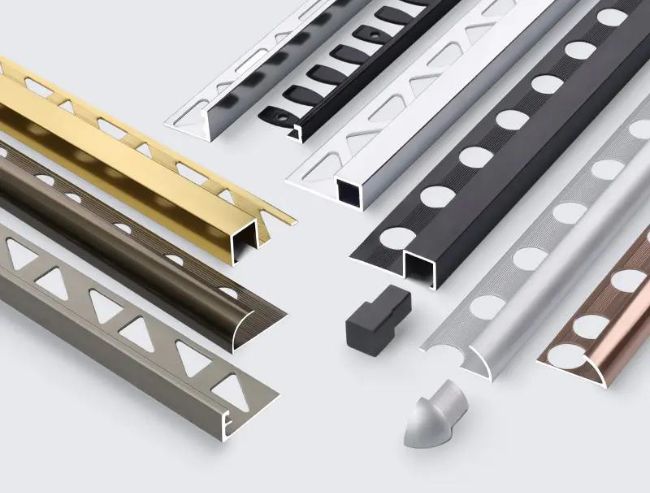
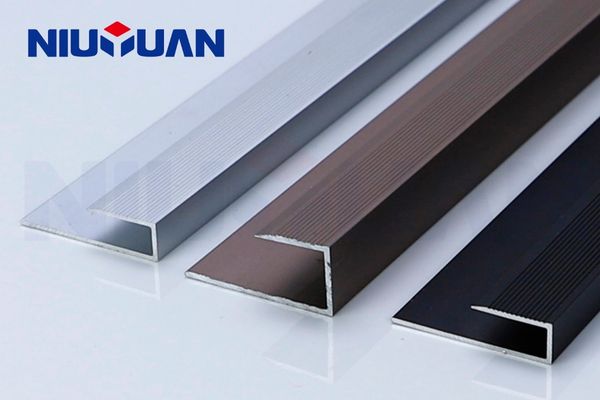
A J-shaped aluminum channel is simply a J-channel made from aluminum instead of vinyl. It serves the same purpose of trimming and finishing edges but offers greater rigidity, durability, and a different aesthetic, often used with metal or fiber cement siding.
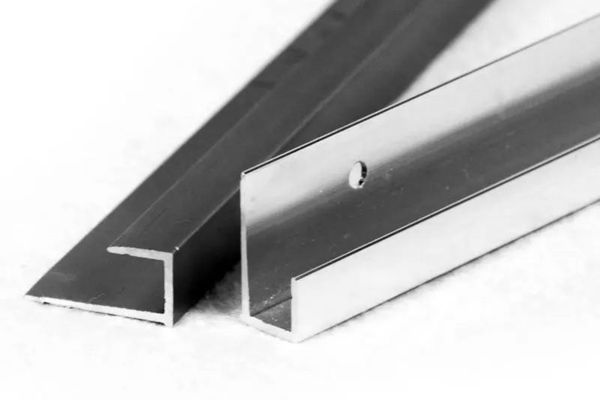
I’ve used aluminum J-channel on a lot of different projects, not just for house siding. Its strength and clean lines make it incredibly versatile. While vinyl is the go-to for most residential vinyl siding jobs, aluminum has its own unique set of advantages and uses.
I remember building a small utility trailer once. I used diamond plate for the side walls and needed something to trim the top edge. Vinyl felt too flimsy. Aluminum J-channel was perfect. It was strong enough to protect the edge from getting banged up, and its metallic finish looked great with the diamond plate.
Why Choose Aluminum?
Aluminum offers several benefits over its vinyl counterpart.
- Durability: It doesn’t get brittle in the cold or warp as much in direct, intense heat as vinyl can. It’s much more resistant to impact. If a stray baseball hits a vinyl channel, it might crack. An aluminum one will likely just get a small dent.
- Material Compatibility: It’s the preferred choice when working with aluminum siding, fiber cement siding, or even wood siding. Using the same material for trim and siding often creates a better, more cohesive seal and look.
- Crisp Lines: Aluminum can be formed into very sharp, precise angles. This creates a very clean, modern architectural look that many people prefer, especially on contemporary home designs. The corners look much sharper than the slightly rounded corners of vinyl.
While it’s often more expensive and can be a bit harder to cut than vinyl, its strength and sharp appearance make it the right choice for many custom or high-end applications.
What is The Difference Between F Channel and J Channel?
Grabbing the wrong trim piece can stop your project cold. J-channel and F-channel look alike, but using one in place of the other won’t work. You need to know which one to use and when.
The main difference is their shape. A J-channel is shaped like a “J”. An F-channel is shaped like an “F”, with an extra flange that extends out. This extra flange is used specifically to hold soffit panels in place under eaves.
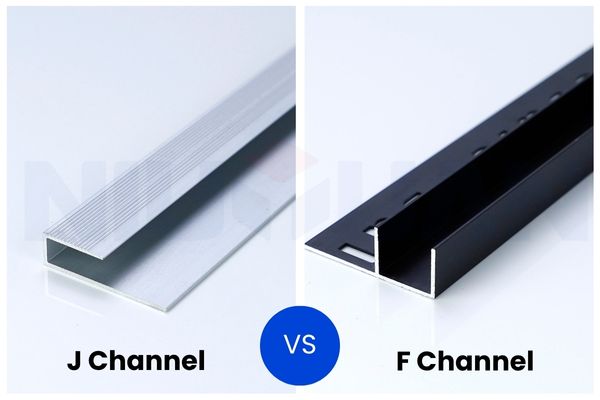
I learned this lesson the hard way on one of my first solo jobs. I was installing soffit and grabbed a box of what I thought was the right channel. I spent an hour trying to figure out why the soffit panels wouldn’t lock in securely. I had grabbed J-channel instead of F-channel. The missing lower flange on the J-channel meant there was nothing for the soffit to grab onto. I had to take it all down and go back to the supplier. It was a frustrating mistake, but I never confused the two again.
Let’s put them side-by-side to make the difference clear.
| Feature | J-Channel | F-Channel |
|---|---|---|
| Cross-Section Shape | Shaped like a “J” | Shaped like an “F” |
| Primary Use | Trimming around windows, doors, and where siding meets a roof or foundation. | Securing soffit panels to the wall. |
| Key Design Element | A single pocket to receive the end of a siding panel. | Two pockets. One attaches to the wall, the other receives the soffit panel. |
| Where You Find It | On vertical walls at all termination points. | Under the eaves, mounted horizontally on the wall. |
Basically, you use J-channel almost everywhere siding ends on a wall. You use F-channel specifically for one job: holding the edge of the soffit that meets the house. The “F” shape creates the perfect slot for the soffit panel to slide into and stay put. Thinking of the “F” as standing for “fascia” or “soffit frame” can be a helpful way to remember its purpose.
Conclusion
J-channel is a simple but vital part of any siding project. It provides a clean finish, protects from water, and ensures your siding job looks professional and lasts for years.
If you need to purchase large quantities of aluminum J channels for your business, please feel free to contact us.